Liza Choa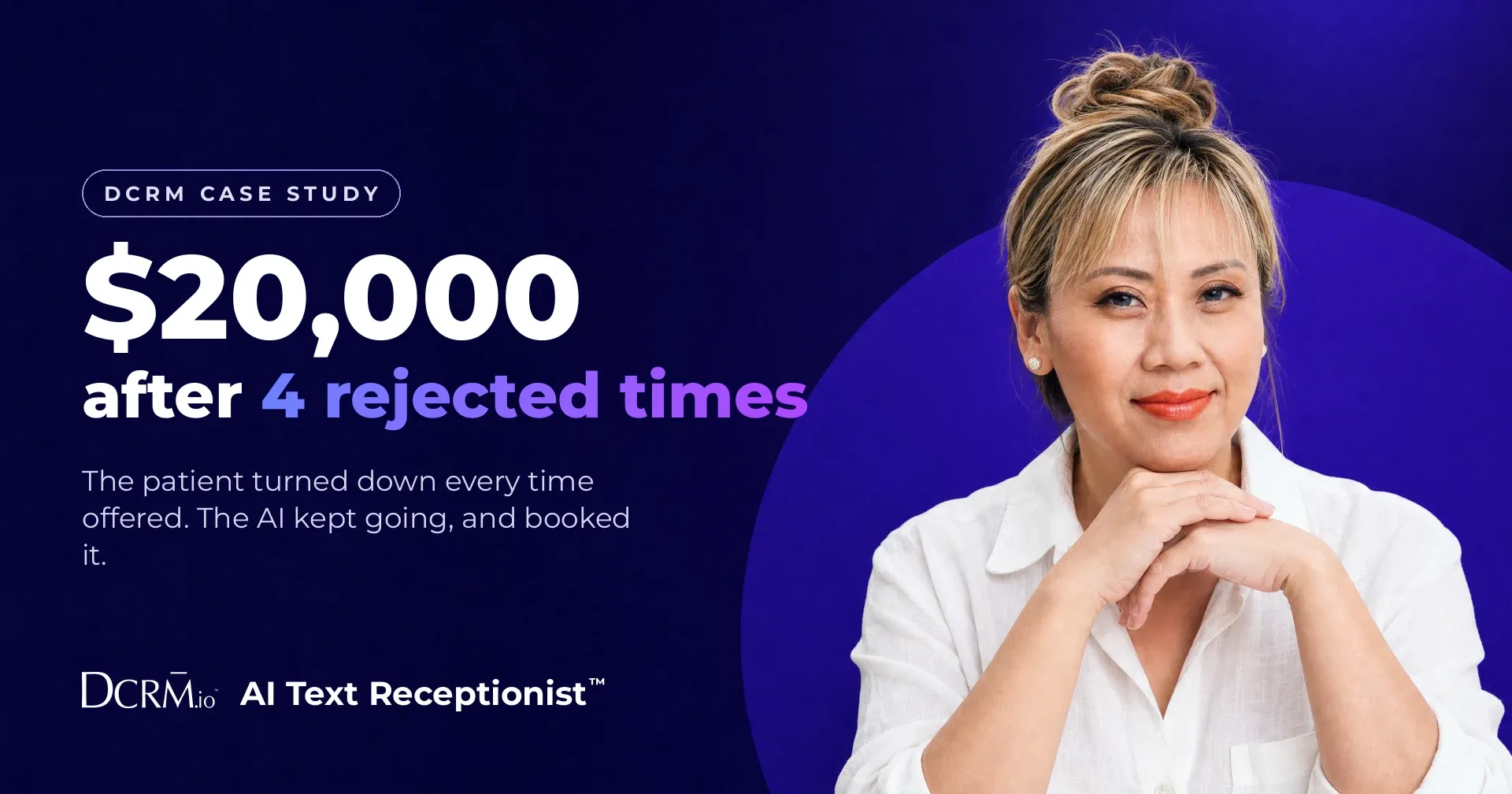
Quick answer
What does a dental AI booking bot do when a patient rejects the times it offers?
At one implant practice it named the constraint, offered 2 real alternatives, offered to hand over to the team, then moved the date range when the patient asked. The patient turned down 4 times, and a $20,000 All-on-4 consult was booked 13 minutes after the enquiry, with no human involved.
$20,000 of All-on-4 work booked by the AI Text Receptionist™ at 2:40 on a Thursday afternoon, 13 minutes after the enquiry came in. In between, the prospective patient turned down every single time they were offered. Twice.
Speed is not the story here. Most booking bots are fine right up until the prospective patient says no. This one is about what happened after the first no.
The numbers
- Appointment times offered and rejected
- 4
- Messages exchanged
- 16
- From the enquiry to a booking
- 13minutes
- Case value
- $20,000
- 2:27pmEnquiry received, through the enquiry form on the practice’s All-on-4 website
- 2:40pmBooked into the calendar
- After the bookingThe first message from a human at the practice
Where most bots would have stopped
They asked for something specific straight away:
There were no Tuesday or Friday mornings after the 10th. Here is what the AI did with that:
It said the true thing first, then offered 2 alternatives, then offered to keep looking. They said no again:
That is the moment worth paying attention to. The AI ran out of options and offered to hand them to a human. They declined:
4 rejected times, 1 offered handover, 1 shifted date range, booked.
In plain English
Every practice has had this conversation at the front desk. The patient wants Tuesday morning, Tuesday morning is full, and how the next 30 seconds go decides whether you keep them.
The wrong move is to say “nothing available” and wait. The second wrong move is to keep offering the same week. What works:
- Name the constraint honestly.
- Offer something real.
- Then ask if they want to move the goalposts.
The AI did that 3 times in a row without getting shorter or pushier.
Frequently asked questions
How many times will the AI try before handing over?
You set that. This practice set 2 rounds, and the AI offered the handover on schedule.
Does the AI remember what the patient already declined?
Yes. It did not offer Wednesday again after Wednesdays were ruled out.
What if the patient wants a specific dentist?
It books against a named dentist’s calendar, which is what it did here.
Does the AI ever book a time that is not really free?
No. It reads the live calendar rather than a copy, which is why it could say there were no Tuesday mornings.
Is the $20,000 money received?
No. It is the case value of an All-on-4 patient, which is what the booking is worth to the practice.

Written by
Liza Choa
Liza Choa is the founder of DCRM and Practice Growth Studio, a boutique dental marketing agency working behind the scenes with some of the most respected dental practices in Australia. She has spent over a decade helping practices grow and scale.
She built DCRM after seeing the same problem in practice after practice. The enquiries were already there, but the new patient numbers did not reflect it. DCRM bridges that gap, so practices increase the return on the marketing they are already paying for.
Disclaimer: The figures in this case study reflect the results of one dental practice over a defined period, and were taken from that practice’s DCRM account at the date stated. The practice is not identified, and identifying details have been removed or generalised. Results vary between practices and depend on factors outside the platform, including enquiry volume, treatment mix, pricing, location, team capacity and how consistently the practice follows up. These figures are not a prediction, projection or guarantee of the results any other practice will achieve. Data is reported as recorded in the platform and has not been independently audited. No patient information is disclosed.