Liza Choa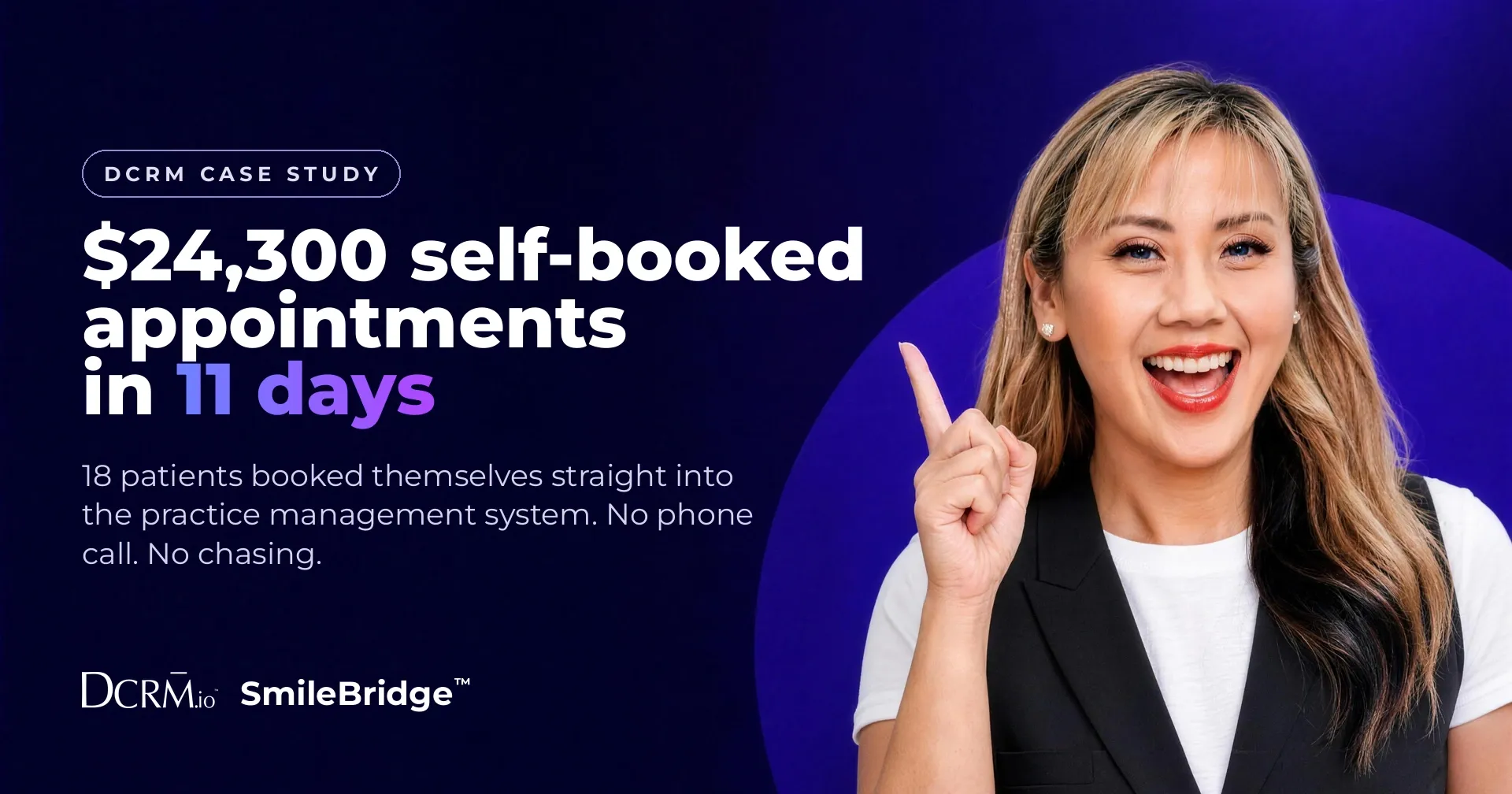
A Victorian practice switched on SmileBridge, a dental online booking form, for the first time on 21 August. By the 31st, 11 days later, it had booked $24,300 of treatment.
That was 18 patients booking their own appointment straight off the practice website. No phone call, no callback, nobody chasing anybody. AND… 59% of them booked while the practice was closed.
$24,300 is the number everyone looks at. It is not the interesting one, so here is what actually happened.
What changed in eleven days
| Measure | 1 to 20 Aug · Before | 21 to 31 Aug · After |
|---|---|---|
| Enquiries | 68 | 35 |
| Booked | 43 | 28 |
| Booking rate | 63.2% | 80.0% |
| Enquiries lost to no answer | 18 | 6 |
Same practice. Same team. Same ads. The only thing that changed was how a patient books.
In plain English: before, roughly 1 in 3 people who enquired never got booked in. After, it was 1 in 5. And the enquiries lost purely because nobody picked up went from 18 down to 6.
How it actually works
Most dental websites have a booking form that sends an email. Somebody reads it, rings the patient back, finds a gap in the calendar and books them in. That round trip takes hours. Often days.
Imagine a patient standing at your front desk, ready to book, and your receptionist says leave your number and I will call you back about a time. Nothing is wrong with that conversation. It is just that some of them will have rung the practice down the road before you get to it.
SmileBridge takes the round trip out. The patient picks a real slot from your live calendar. They confirm. The appointment exists in your practice management system before they close the tab, and your system writes the booking back into DCRM, so the pipeline updates on its own.
Why the form works
The reason this dental online booking form converts is not clever automation. It is that the patient never leaves the practice website. The form is designed with UX in mind. It is designed by dental marketers with over 15 years’ experience, not developers.
The SmileEngine form with SmileBridge sits on your site, in your branding, on your domain. The patient does not get bounced to a third party booking portal with a different logo, a different look and a fresh set of fields to fill in. Every hop between the patient and the appointment loses people. Most booking tools add a hop. This one removes one.
The patient booking experience is like teflon instead of sandpaper!
The question everybody asks me first
“Does this replace my front desk?”
No. It takes the boring part off them.
18 bookings in 11 days is about 2 a day that nobody had to chase, which is 2 fewer callbacks and 2 fewer trips through the calendar. That time goes back to the calls that need a person on the other end. The nervous patient, or the implant enquiry, or the one ringing 3 practices who is deciding on how the conversation went.
The AI and the automation are there to cover off speed. Your team is there for the relationship and to build the trust. They complement each other.
What most dental CRMs cannot do
Plenty of systems will capture a lead and nurture it. Very few will book it.
The difference is the write-back. A form that emails the practice gives you a lead sitting in an inbox. A form that creates the appointment in your practice management system gives you a patient in the books. Most tools stop at the first step, because writing into a practice management system means building an integration for every system, and that is real work.
When this is not useful for you
If your books are already full and your problem is capacity rather than conversion, then you don’t need this. Invest the money somewhere else. I would rather tell you that now than have you switch it on and wonder why nothing changed.
Where it makes sense is when you have enquiries coming in and a chunk of them are not getting booked.
How to switch it on
Three simple steps.
- Ask your practice management system provider for API access to your account.
- Send us the API key.
- We build the integration and test the SmileBridge dental online booking form end to end before a single patient sees the form.
That’s pretty much all you have to do on your end. You get the key, we do the rest, and we can have it live in as little as 7 days.
Frequently asked questions
What is DCRM SmileBridge?
An add-on to the DCRM SmileEngine form that writes appointments directly into a dental practice management system. The patient books a real slot from the live diary. The practice management system confirms the booking back to DCRM automatically.
Can patients book their own dental appointment online without staff involvement?
Yes, where the booking form is integrated with the practice management system. In this practice, 18 of 23 form bookings over eleven days involved no staff contact at all.
Which practice management systems can DCRM integrate with?
Any practice management system that provides API access to your account. The practice requests the key from their provider and the integration is built and tested from there.
How long does the integration take to set up?
The practice’s only task is obtaining API access from their provider. Build and testing happens after the key is handed over. We can have this live for you in as little as 7 days.
Does online self-booking reduce front office workload?
It changes what the workload is. Straightforward bookings happen without staff. The time freed up goes to enquiries that need a conversation, such as implants, cosmetic treatment and anxious patients.
Does self-booking cannibalise phone bookings?
Not in this case. Enquiries lost to no answer fell from 18 to 6, which suggests the form captured people who would otherwise have gone unanswered.

Written by
Liza Choa
Liza Choa is the founder of DCRM and Practice Growth Studio, a boutique dental marketing agency working behind the scenes with some of the most respected dental practices in Australia. She has spent over a decade helping practices grow and scale.
She built DCRM after seeing the same problem in practice after practice. The enquiries were already there, but the new patient numbers did not reflect it. DCRM bridges that gap, so practices increase the return on the marketing they are already paying for.
Disclaimer: The figures in this case study reflect the results of one dental practice over a defined period, and were taken from that practice’s DCRM account at the date stated. The practice is not identified, and identifying details have been removed or generalised. Results vary between practices and depend on factors outside the platform, including enquiry volume, treatment mix, pricing, location, team capacity and how consistently the practice follows up. These figures are not a prediction, projection or guarantee of the results any other practice will achieve. Data is reported as recorded in the platform and has not been independently audited. No patient information is disclosed.