Liza Choa
Quick answer
What should a dental practice do when a new patient does not answer the first call?
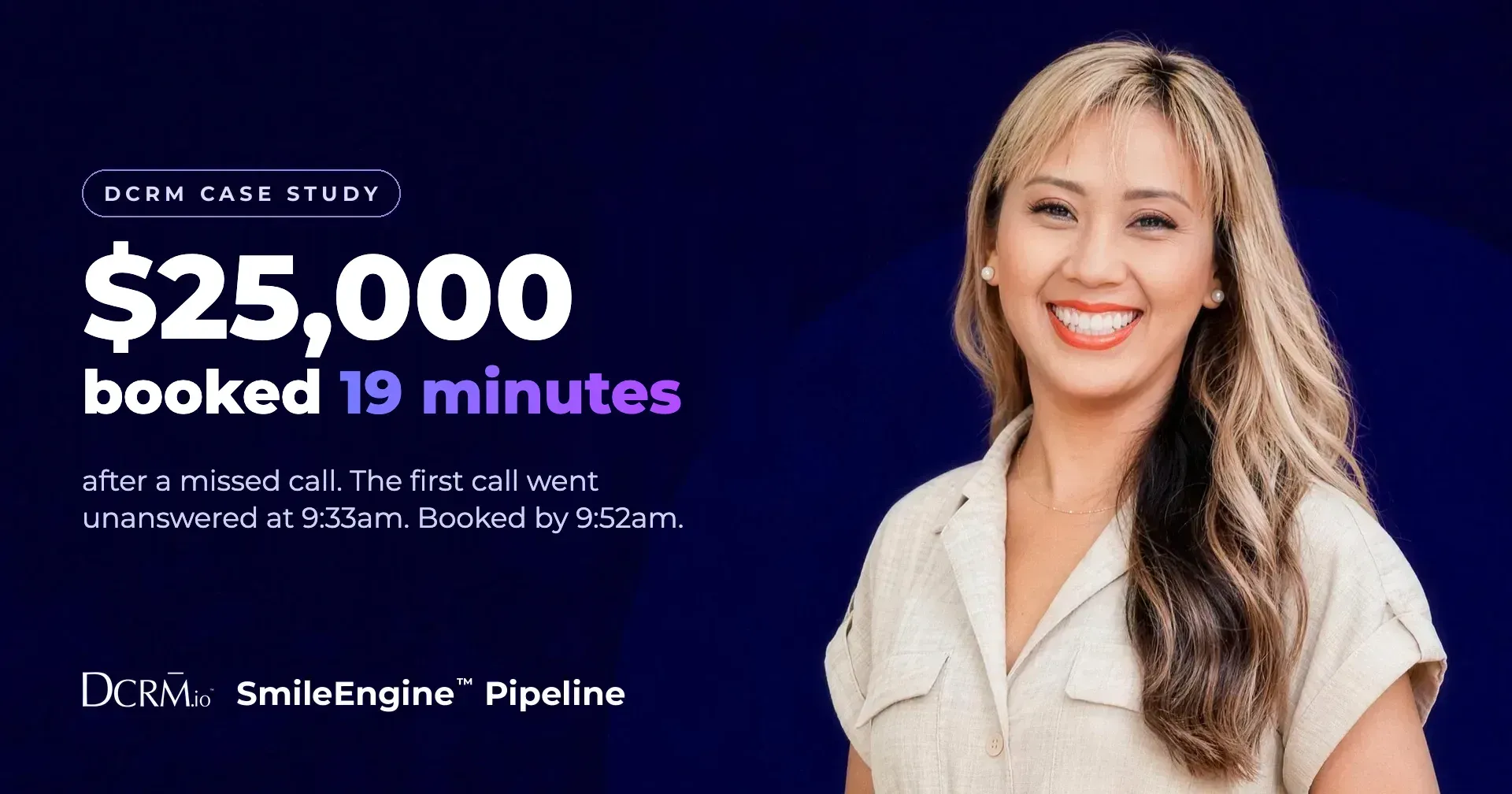
Do not treat the missed call as the end of the enquiry. Make sure a person at the front desk knows who enquired, what for and what it is worth, then ring back quickly. In this case the first call went unanswered and the $25,000 case was booked 19 minutes later.
CallBridge™ made sure the front desk knew about the enquiry, even though the patient never picked up.
The scene
A$25,000 of full arch implant work was booked at 9:52am on a Tuesday. The first call to the patient went unanswered at 9:33am. This is a case study about dental lead follow up, and why that missed call was not the end of the enquiry.
The booking is not the interesting part. The missed call is. I want to walk you through why, because it is the exact moment most enquiries go cold, and this one did not.
The timeline
| What happened | When |
|---|---|
| Enquiry lands from a Google ad | 9:28am, Tuesday 15 September |
| Automatic SMS tells the patient to expect a call | 8 seconds later |
| CallBridge™ rings the front desk, then the patient | 9:33am. No answer. |
| Booked in | 9:52am |
| Missed call to booked | 19 minutes |
| Enquiry to booked | 24 minutes |
| Case value recorded | $25,000 |
| Patient | New, from a paid search ad for full arch implants |
The 8 words
The patient wrote 8 words in the form: "Upper and bottom implants, with use of super".
"Upper and bottom" means both jaws. "With use of super" means they had already looked into early release of superannuation to pay for it.
That is somebody who has done their homework. They were ready to talk. They just were not holding their phone at 9:33am.
What a missed call normally means
Now… Here is where most enquiries go wrong. You have probably seen this in your own practice.
Your team tries to call a website lead. The patient does not answer. The system logs "no answer" and the enquiry sits in a list with everything else that came in that morning.
Nobody at the front desk heard it happen. By the time somebody scrolls down to it, a patient this ready may have booked a consult somewhere else.
How CallBridge works
CallBridge™ is the speed to lead feature inside the SmileEngine™ Pipeline, our dental lead follow up system. It does not ring the patient first. It rings your front desk first, tells them who has enquired and what for, and then connects them to the patient.
So at 9:33am, a real person at the front desk heard it: a new patient, both jaws, came in from the Google ad. Then the patient's phone rang out.
Using the SmileEngine pipeline, this enquiry still stays in the pipeline, a task was created, so they are not forgotten.
SmileEngine pipeline ensures the front desk team follows every lead at least 5 times.
In plain English
CallBridge did not book this patient. Your front desk would have, and in this case the front desk did.
What CallBridge did was put a $25,000 enquiry in front of a person before the first call failed.
That is what good dental lead follow up looks like. The enquiry never depended on somebody finding it in a list, and 19 minutes after the missed call it was in the books.
Frequently asked questions
How does the automatic call work?
It is the speed to lead feature in the SmileEngine™ Pipeline. It rings your front desk, then connects them to the patient.
What happens if the patient does not answer?
The call is logged as missed. Your front desk has already heard who enquired and what for, so the follow up does not depend on somebody finding it later.
What does “use of super” mean in a dental enquiry?
Early release of superannuation to pay for treatment. When a patient raises it unprompted, they have already been thinking about cost seriously.
Where does the $25,000 come from?
It is the case value recorded on the opportunity for a full arch implant case. No price had been quoted to the patient at this point.
Did an AI book this patient?
No. The front desk did. CallBridge made sure they knew about the enquiry very quickly.

Written by
Liza Choa
Liza Choa is the founder of DCRM and Practice Growth Studio, a boutique dental marketing agency working behind the scenes with some of the most respected dental practices in Australia. She has spent over a decade helping practices grow and scale.
She built DCRM after seeing the same problem in practice after practice. The enquiries were already there, but the new patient numbers did not reflect it. DCRM bridges that gap, so practices increase the return on the marketing they are already paying for.
Disclaimer: The figures in this case study reflect the results of one dental practice over a defined period, and were taken from that practice’s DCRM account at the date stated. The practice is not identified, and identifying details have been removed or generalised. Results vary between practices and depend on factors outside the platform, including enquiry volume, treatment mix, pricing, location, team capacity and how consistently the practice follows up. These figures are not a prediction, projection or guarantee of the results any other practice will achieve. Data is reported as recorded in the platform and has not been independently audited. No patient information is disclosed.