
DCRM Ms Smile™
The AI coach your team practises the $20,000 call with
Your coordinator gets one shot at the full arch enquiry. Ms Smile™ lets them have that conversation twenty times first, out loud, before a real patient ever rings.
Built from twenty years in sales and over a decade inside dental practices.
A coordinator practising a full arch enquiry with Ms Smile™ as the patient, the framework ticked off as she speaks, and her scores when she hangs up
The problem
Nobody ever trained the most important salesperson in your practice.
Your front office coordinator was trained on the software, the appointment book, the health funds and the sterilisation room.
Then a patient rang about a $20,000 full arch case and asked what it costs, and the whole thing rested on an instinct nobody ever taught them.
The best practices handle that call beautifully. Most lose it in the first minute and never find out why.
The same team. A far better call.
Without practice
- Coordinators learn on live enquiries you paid for.
- Half a training day a month, barely enough to build muscle memory.
- No feedback on what to do differently next time.
- Nobody wants to fail in front of the practice owner.
- A new starter takes three months to be useful on the phone.
With Ms Smile™
- They learn on an AI patient, at no cost to your marketing.
- Ten minutes, three times a week, every single week.
- Feedback arrives the moment the call ends, against a set framework.
- They can fail four times at 8am and nobody ever knows.
- A new starter runs the call thirty times in week one.
Why this matters. You can buy more enquiries. If the person answering the phone cannot convert a high-value conversation, more enquiries only means more expensive losses.
What it does
Your team practises the one call
that pays for everything else.
Role play, out loud
It is an AI patient, and it will take the call as many times as you like
Ms Smile™ plays the full arch enquiry, the nervous first-timer, the cosmetic enquirer, and the patient already quoted somewhere cheaper. Your coordinator speaks, Ms Smile™ answers back.
It is a flight simulator for the phone call that matters most. The patient on the other end is never a real one, so a bad call costs you nothing.
Illustration: the patients Ms Smile can play, each with the line she opens the call with.
A framework, not vibes
Every call runs on a structure, so your team stops improvising
The conversation follows the Ms Smile™ framework. It sets what happens in a high-value enquiry call, in what order, and what to do when the patient asks for a price in the first sentence.
The price question gets treated as a trust question rather than an information question. Answer it, then go straight back to securing the appointment.
Illustration: a patient asking the price, the coordinator answering, and going straight back to booking.
The same standard as the real calls
They rehearse against the framework their real calls are graded on
ToothTalk™ Analytics grades the calls your team actually took. Ms Smile™ is where they rehearse before the next one. Same headings, same standard.
Your team practises the exact thing they are measured on. Nobody is being marked against a standard they were never shown.
Illustration: a real call graded, its weakest part rehearsed three times with Ms Smile, and round again, using example scores.
Somewhere safe to be bad at it
It lets people fail privately, which is the only way they improve
Nobody wants to be bad at their job in front of the practice owner. In a role play they can be bad at it four times before opening, and nobody ever knows.
That is the difference between a team that nods along in a training room and a team that actually changes what it says on the phone.
Illustration: four morning role plays of a full arch enquiry, scored out of ten and seen by the coordinator only.
The framework
The eight parts of the call, each scored out of ten
Coaching stops being a vague feeling that the call did not go well. It becomes one heading, with a score against it.
01/10
First impression
Answered inside three rings, with the practice name, their own name, and a voice that is pleased the patient rang.
02/10
Discovery
Permission asked before the questions start, then open questions, so the situation is understood before anything is answered.
03/10
Setting expectations
The patient knows who they are seeing, how long it takes, what happens in the chair, and that no decision is needed on the day.
04/10
Booking the appointment
The booking is assumed rather than requested, two specific times are offered, and a price question never ends the call.
05/10
Confidence and professionalism
No filler words, no guessing, a steady pace, and clinical questions referred back to the dentist.
06/10
Handling concerns and objections
The worry is acknowledged first and answered second, so the patient feels heard rather than managed.
07/10
Lead source capture
Every caller is asked how they found you, naturally and inside the conversation, on every single call.
08/10
Appointment confirmation
Date, time, dentist, address and what arrives by SMS, all repeated back before the call ends.
What a training day cannot give you
It happens once in a while
Ten minutes three times a week beats half a day a month. Skill on the phone is a rehearsal problem, not an information problem.
It cannot be summoned
You cannot conjure a nervous full arch patient at 8am on a Tuesday to practise with. Ms Smile™ turns up whenever your team is free.
You cannot see whether it worked
Every session is graded and kept on a dashboard: a score for each part of the call, and written feedback beside it. Progress is documented, not remembered.
It is not joined to your real calls
Training in a room has no link to your booking rate. This sits in the same system as the grades and the recordings.
Where this sits in DCRM
Everything else covers the speed. This covers the trust.
The rest of DCRM answers the enquiry, nurtures it and gets it booked, then hands your coordinator a conversation worth having. ToothTalk™ Analytics tells you how that conversation went. Ms Smile™ is where it gets rehearsed.
Diagnose the call. Fix the call. Repeat.
- AI Text Receptionist™Answers instantly
- SmileEngine™ PipelineNothing gets lost
- ToothTalk™ AnalyticsGrades the real call
- Ms Smile™Rehearses the next oneYou are here
Case studies
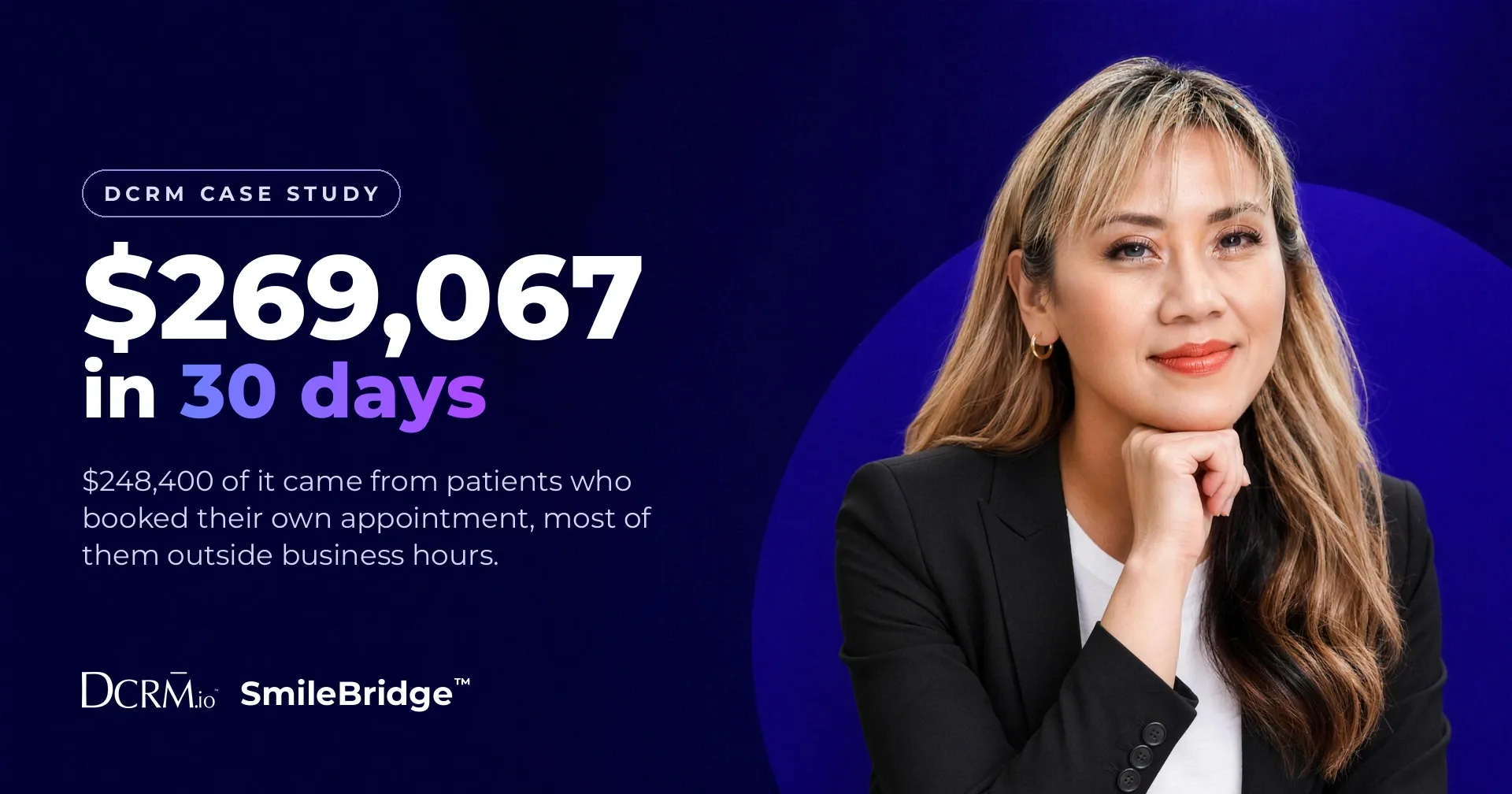
The proof sits on the case study pages
AI Text Receptionist™
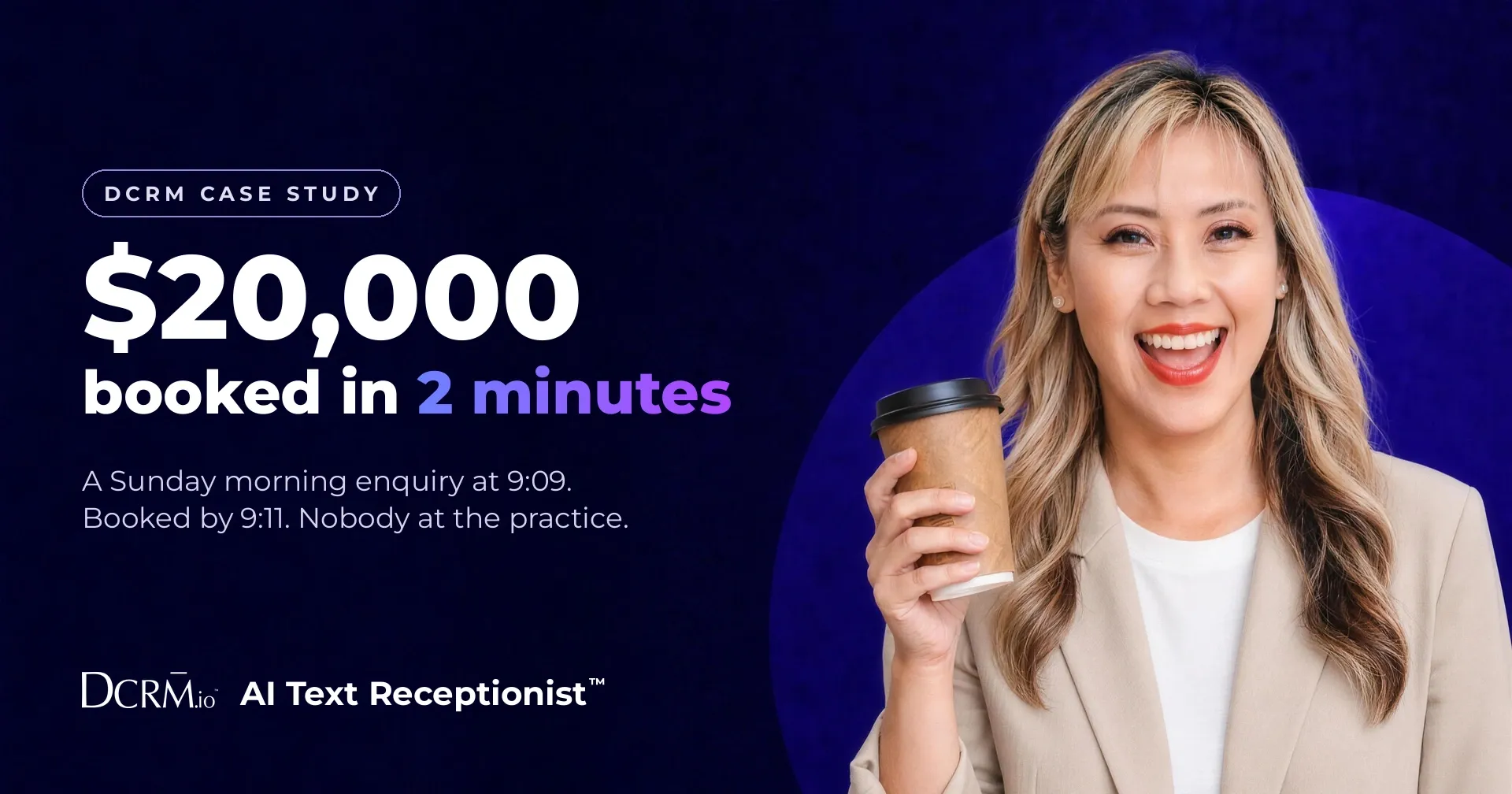
A Sunday morning enquiry became a $20,000 booking in 2 minutes
AI Voice Receptionist™
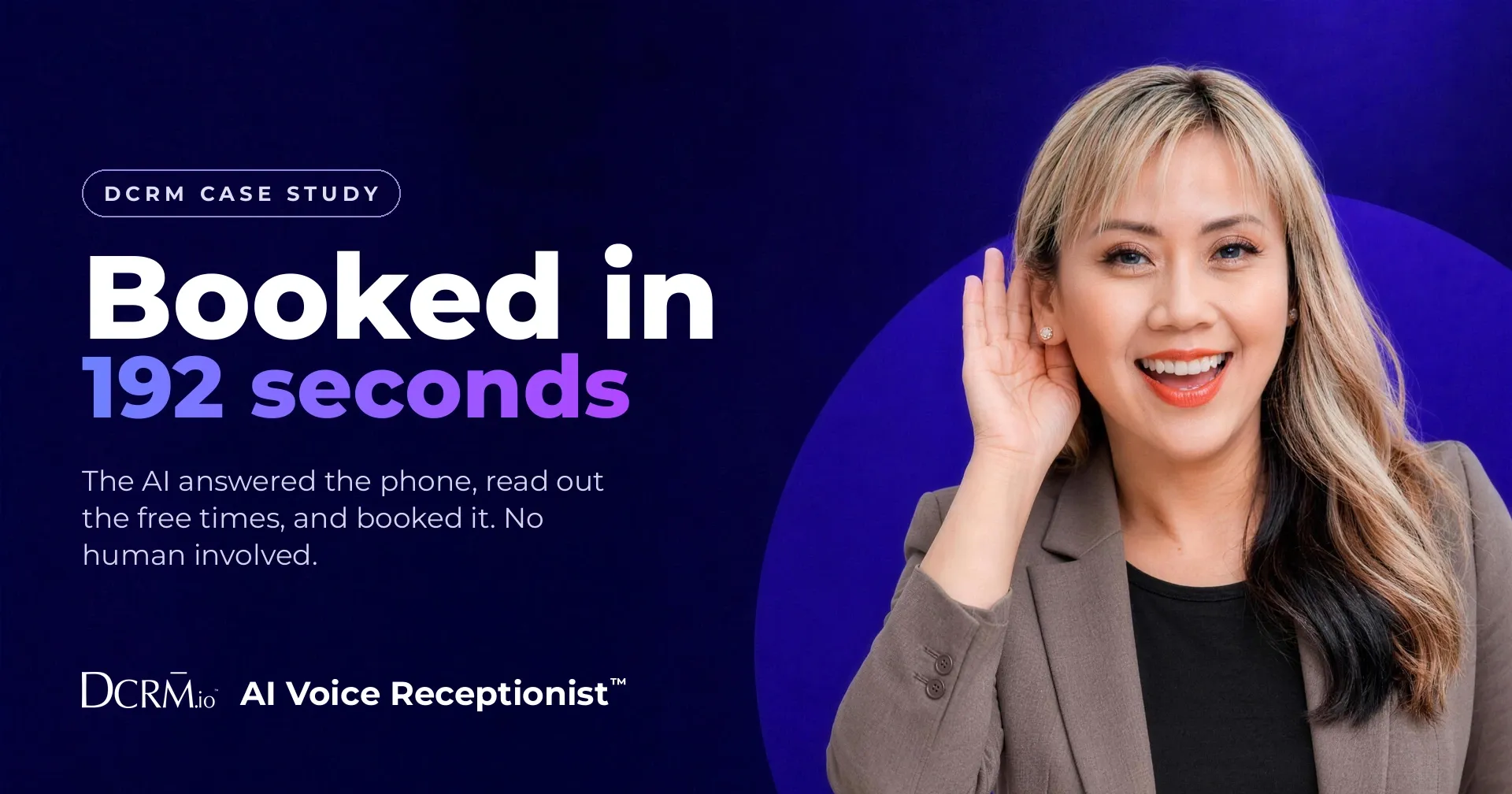
The AI read out the times, took the answer, and booked it
Be honest with yourself
When this is not for you
If your treatment mix is check-ups and hygiene with very little high-value work, the return is small. Your calls are short and the stakes are low.
If you cannot invest ten minutes for the team to practise, it will sit unused. Ten minutes is not much, and it still has to be allocated.
Where it pays for itself fastest is a practice doing implants, full arch, orthodontics or cosmetic work.
Getting started
How to switch it on
- Use ToothTalk™ Analytics to find the treatment your team struggle to convert.
- Book a standing ten minutes, three times a week, and protect it.
- Open Ms Smile™ and practise that treatment, out loud.
- Have the owner or practice manager go first, so the team can see how it works.
- Watch the scores each week, next to the booking rate for that treatment.
Make it a game. Set teams, keep score, hand out a prize.
FAQs
Questions we get asked
What is dental receptionist training with AI?
It is training where an AI acts as the patient, so your front office team can practise real enquiry calls before taking them. In DCRM that is Ms Smile™, and it coaches the call against a set framework afterwards.
Does Ms Smile™ talk to patients?
No. Ms Smile™ talks to your team. The patient-facing AI in DCRM is the AI Text Receptionist™ and the AI Voice Receptionist™.
What sort of calls can the team practise?
Full arch and implant enquiries, Invisalign, cosmetic, root canal, nervous new patients.
How long does a session take?
The role play call itself runs about five minutes. Ten minutes covers the call and reading the feedback, which is why ten minutes is the slot we recommend protecting.
Will it tell us if the coordinator did well?
Yes. It scores each part of the call out of ten, shows what went well and what to change, and keeps every session on the dashboard so you can see the trend.
Is this just a chatbot?
The difference is the framework and the feedback. A chatbot holds a conversation. This one measures the conversation against a structure built from real high-value dental calls.
How is this different from ToothTalk™ Analytics?
ToothTalk™ grades the real calls that already happened. Ms Smile™ is where your team practises before the next one. Same framework, which is the entire point.
Will my team actually use it?
Only if it is built into the daily routine, run by the practice manager with the front office team. Make it fun, gamify it, create teams and reward them with prizes.
What if we already train our team?
Then you already know the power is repetition. This is the repetition, on demand, without spending live enquiries and marketing money on it.
Does it replace my treatment coordinator?
No, it is the opposite. Everything else in DCRM covers speed so your team can cover trust. Ms Smile™ makes them better at the trust half.
You can automate the speed. You cannot automate whether a patient trusts the person on the phone.
If you already spend money making the phone ring, training the person who answers it is the cheapest return available to you.