Liza Choa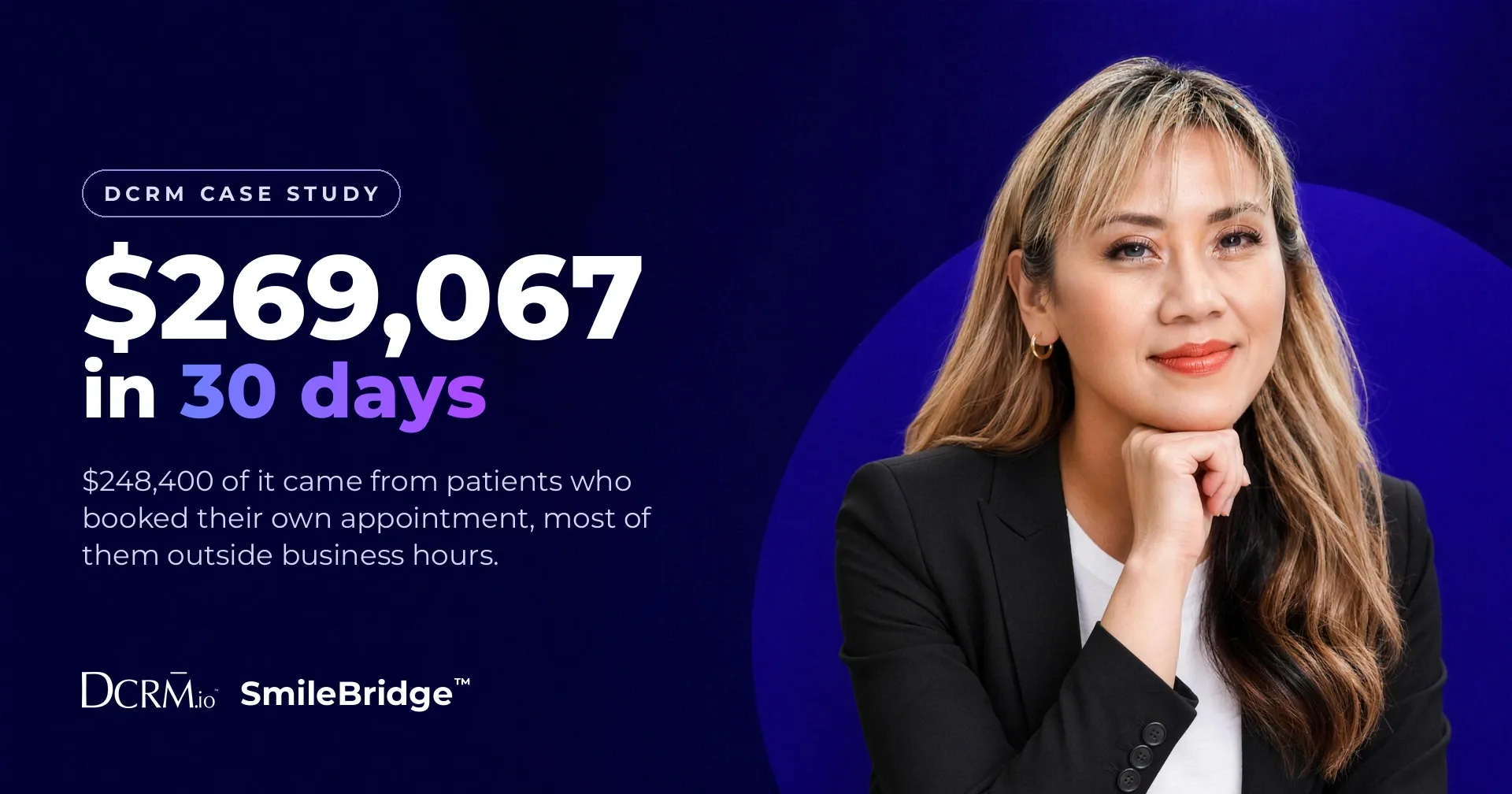
Quick answer
Do dental patients actually book their own appointments online?
Yes, and they convert better when they do. At 1 Melbourne practice, 73 of 92 enquiries in 30 days came through a dental patient self-booking form, and 63.0% of those ended up booked in, against 26.3% for every other channel. 65.2% of the bookings were made outside office hours.
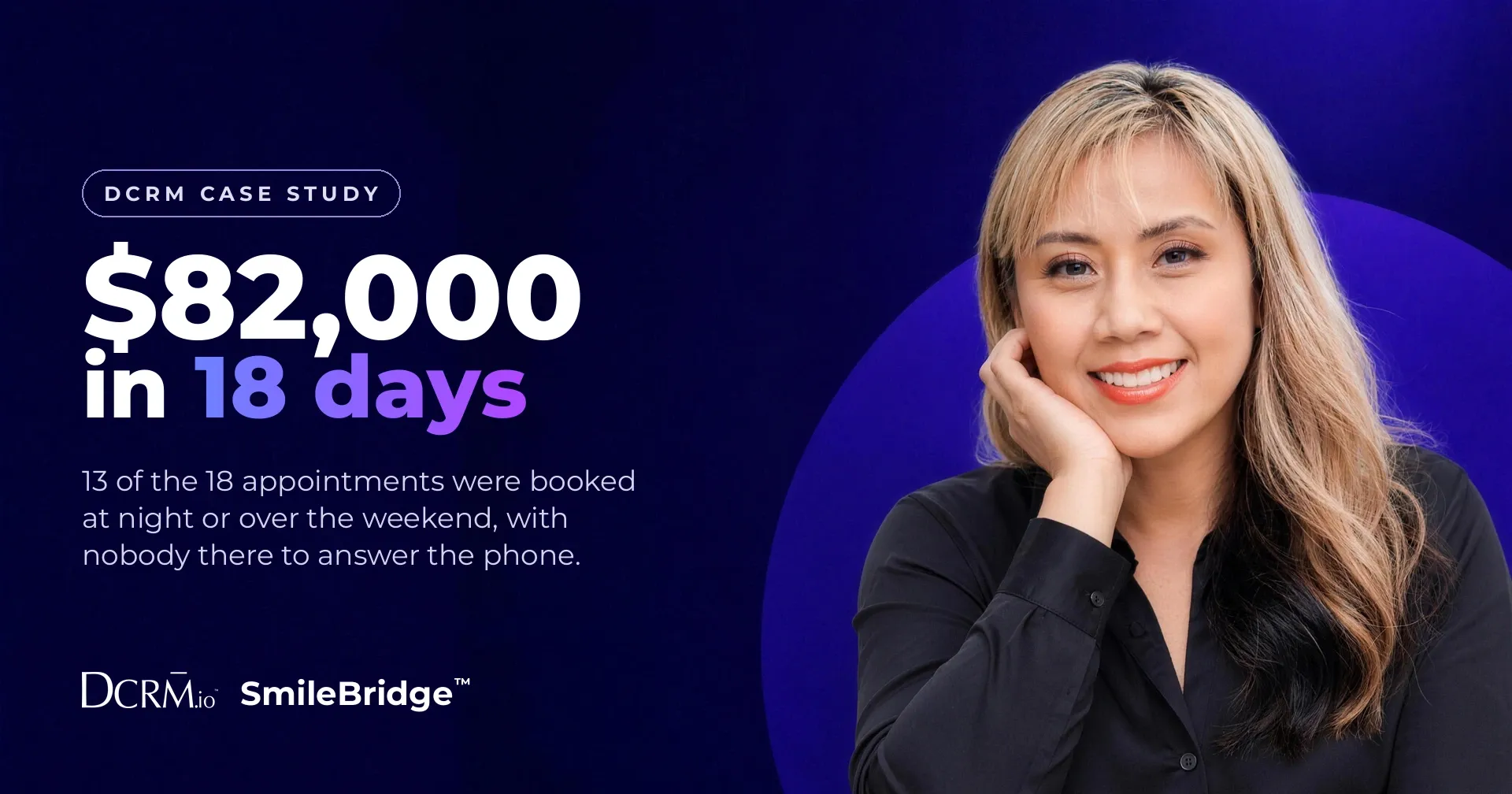
At 2 minutes past 5 on a Sunday, somebody booked themselves an emergency appointment at a dental practice in Melbourne’s north-west. The practice was closed. Nobody there saw it until Monday morning, and by then the patient was already in the calendar for half past 12 that same day.
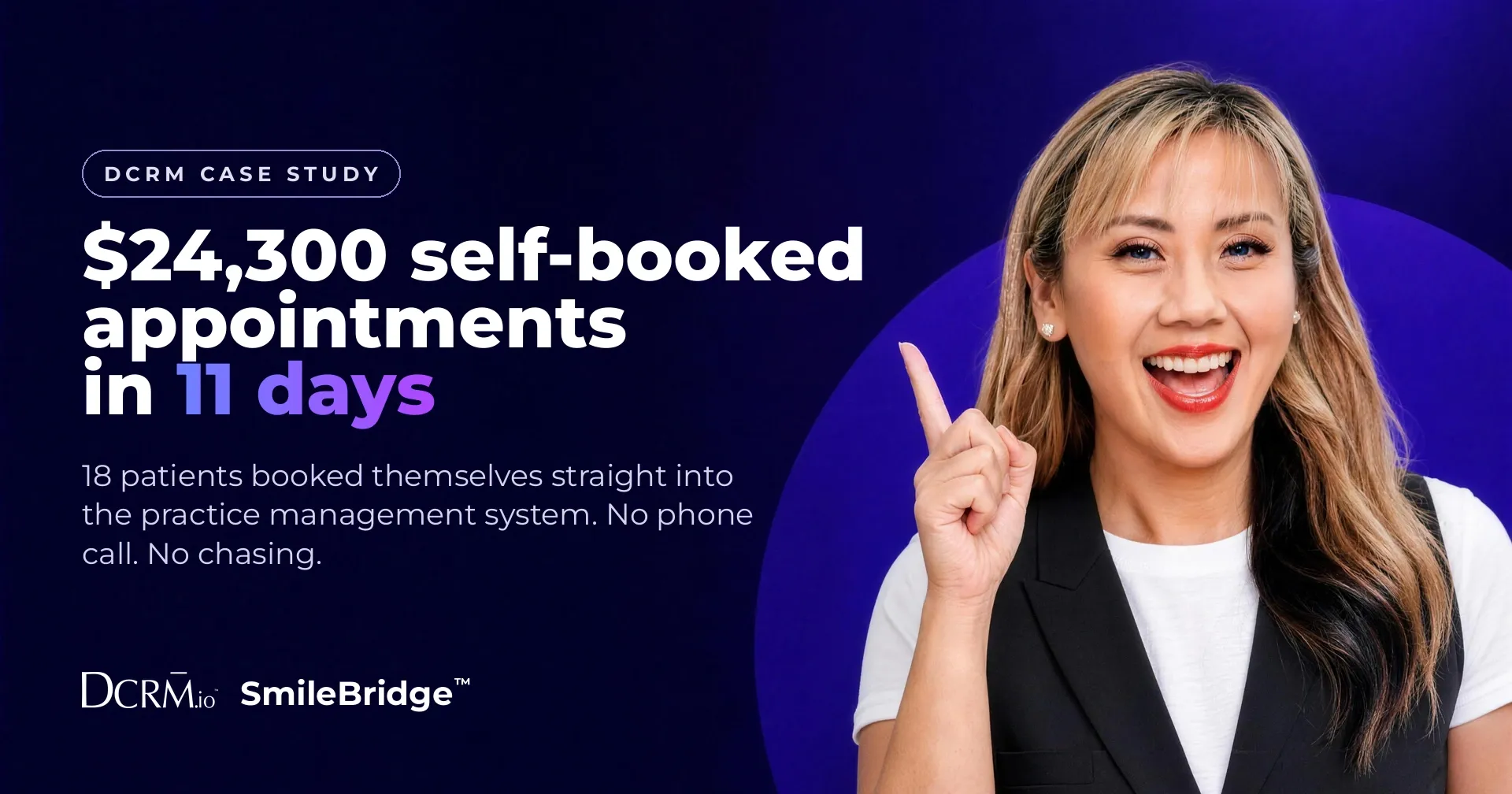
That came through SmileBridge™, a dental patient self-booking form the practice switched on on 22 July. In the 30 days that followed, 92 enquiries came in and 51 ended up booked in, carrying an estimated $269,067 of treatment. 73 of those 92 arrived through the booking form. 46 of the 73 ended up booked in, and those 46 carry $248,400 of the total.
The money is not the interesting part. What I find interesting is what happened to those patients once they arrived. That is the bit I think you can actually do something about, and it cost this practice nothing to change.
- Booked by patients who booked their own appointment
- $248,400
- Of booking form enquiries ended up booked in
- 63.0%
- Of every other channel ended up booked in
- 26.3%
- Of those bookings made outside business hours
- 65.2%
Before and after
| Measure | 30 days before · Before | 30 days after · After |
|---|---|---|
| Enquiries | 41 | 92 |
| Of those, through the booking form | 0 | 73 |
| Booked in | 10 | 51 |
| Enquiries booked in | 24.4% | 55.4% |
And inside the 30 days after, by how the patient got in touch:
| 30 days after | Enquiries | Booked in | Rate |
|---|---|---|---|
| Through the booking form | 73 | 46 | 63.0% |
| Every other channel | 19 | 5 | 26.3% |
In plain English
Before, roughly 3 in every 4 people who enquired never made it into the calendar. After, more than half did.
And the gap inside that second column is the bit I would look at twice. Of the 73 who came through the booking form, 46 ended up booked in. That is 63.0%. Of the 19 who arrived any other way, 5 ended up booked in, which is 26.3%. Those 19 are the ones who rang, or filled in an enquiry form, and then waited for a call back. That is 36.7 percentage points between 2 groups of people who wanted the same thing, at the same practice, in the same month.
AND… 65.2% of those 46 bookings were made outside 9am to 5pm, Monday to Friday.
- On a weekend
- 11
- After 6pm on a weekday
- 11
- Before 8am
- 6
There is a second thing in that table worth saying out loud. Enquiries arriving any other way fell from 41 to 19. So the form did not only add volume on top. It moved where your enquiries land.
Out of a queue your front desk works through, and into a calendar that fills itself.
That is the part I would want if it were my practice.
What I will put my name to is the gap inside the after window. 63.0% against 26.3%, same practice, same month, same team, same ads. The only difference between those 2 groups is how the patient booked.
I have deliberately not shown you a before and after on the money, even though I could. The reason is honest and a bit awkward. SmileBridge™ is also the thing that records what treatment a patient wants. So the month after it went live has better data as well as better results. Comparing dollars across that line would flatter us.
That is the real data, and you can see the real impact.
Why the form works
One patient at another practice on the same form put it better than I can.
She was booked in 15 minutes later, at 8 o’clock in the morning, before anybody had picked up a phone!
Where these numbers come from
The case values are an estimate of what is sitting in the calendar, not invoiced revenue. Each booking is matched to the treatment the patient chose and priced off our standard case value table. Where a patient booked a complimentary All-on-4 consultation, it carries the full All-on-4 case value. That is what an All-on-4 patient is worth to the practice, so that is what I count.
10 of the 51 booked-in enquiries could not be valued at all and sit at $0. So I would read $269,067 as a floor, not a stretch.
Booked in means the enquiry reached the Booked In stage or was marked won. 39 of the 46 carry a booking artefact against them, a calendar entry, an appointment date and time, or a named dentist. Of those 46, 6 later cancelled and 3 did not show up.
Frequently asked questions
How is the treatment value of a self-booked appointment worked out?
From the treatment your patient chooses when they book, priced off our standard case value table. It is an estimate of what is sitting in your calendar, not what has been invoiced.
What happens if a patient starts the form and does not finish it?
They get a text a few minutes later. When they reply, your front desk takes over and books them manually. About 2 in 3 of the patients who reply end up booked.
Do patients really book dental appointments after hours?
Yes, and it is the main reason this exists. In one Victorian practice, 59 per cent of self-bookings were made while the doors were shut, including an All-on-4 consultation at 12.52am on a Sunday.
Which practice management systems does it write into?
Any system that gives you API access to your own account. Tell us which one you use and we will confirm before you commit to anything.
Are we replacing our front desk with this?
No. The patients who are ready to go book themselves, so the phones are freer for the ones who need a human. The nervous patient, the payment plan question, the full-arch patient who wants reassurance before they commit.

Written by
Liza Choa
Liza Choa is the founder of DCRM and Practice Growth Studio, a boutique dental marketing agency working behind the scenes with some of the most respected dental practices in Australia. She has spent over a decade helping practices grow and scale.
She built DCRM after seeing the same problem in practice after practice. The enquiries were already there, but the new patient numbers did not reflect it. DCRM bridges that gap, so practices increase the return on the marketing they are already paying for.
Disclaimer: The figures in this case study reflect the results of one dental practice over a defined period, and were taken from that practice’s DCRM account at the date stated. The practice is not identified, and identifying details have been removed or generalised. Results vary between practices and depend on factors outside the platform, including enquiry volume, treatment mix, pricing, location, team capacity and how consistently the practice follows up. These figures are not a prediction, projection or guarantee of the results any other practice will achieve. Data is reported as recorded in the platform and has not been independently audited. No patient information is disclosed.