
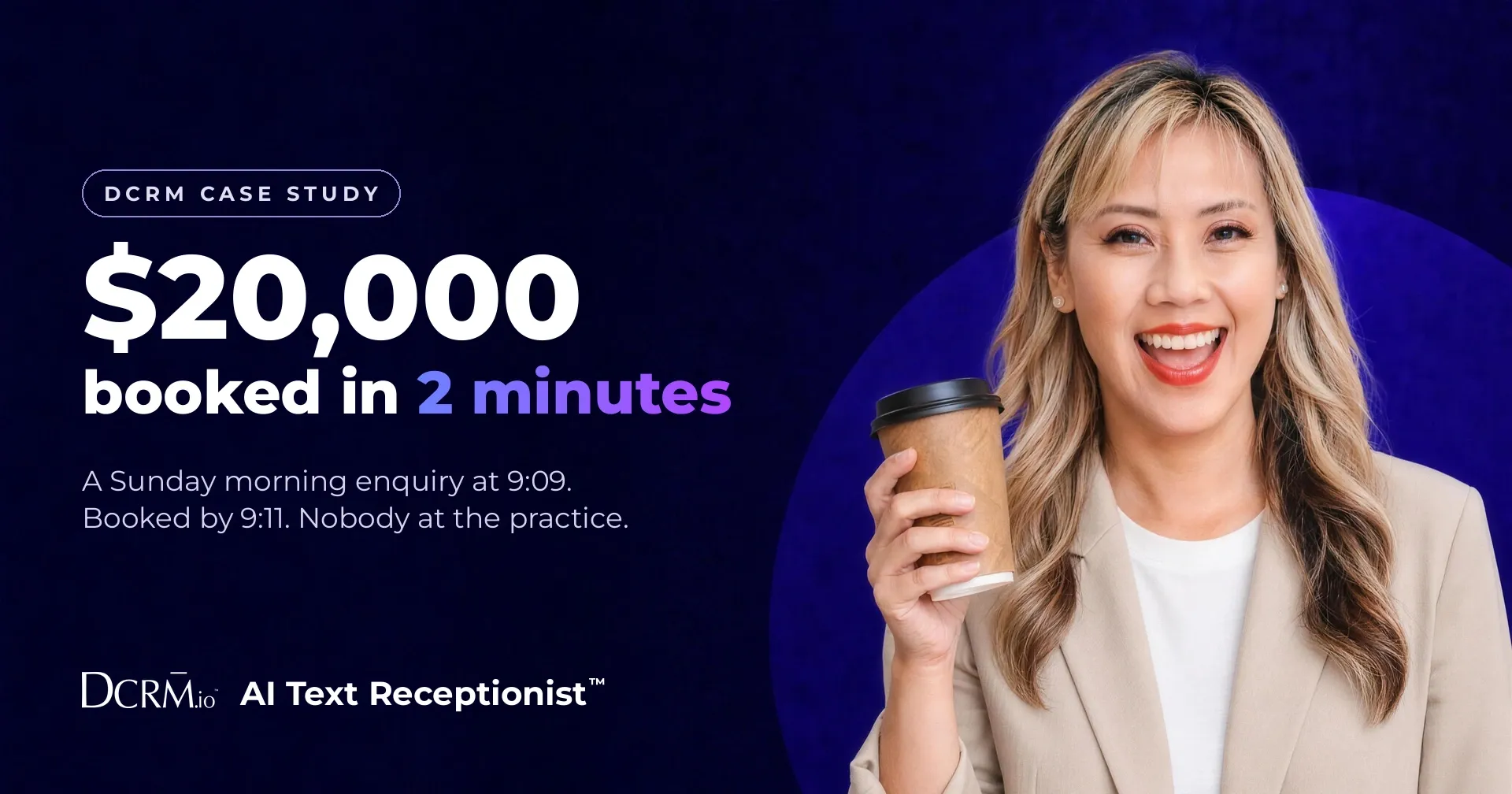
AI Text Receptionist™
Your front desk gets them the moment they are.
Runs on our Book-By-Chat framework, built for dental enquiries.
A patient texting the practice about implants late on a Sunday night, answered by the AI within seconds, and the card waiting for the coordinator at 8am
The problem
They send them at 9pm. On Sunday morning. In the gap between putting the kids to bed and going to sleep, which is exactly when somebody finally decides to do something about the tooth that has been bothering them for a year.
Your front desk cannot answer a text while they are with a patient. So the reply sits in an inbox until somebody who is already on the phones finds a spare minute. By then, they have already booked with someone else.
Imagine a patient standing at your front desk with your price list in their hand, and nobody looks up. That is what an unanswered text is.
Why this matters. Somebody who has just downloaded your price list is comparing you with two or three other practices that evening. It is not a considered process. They message everyone, and they go with whoever comes back first.
What it does
Speed, not office hours
Most practices have already automated the asking. The follow-up text goes out, the patient writes back, and that reply waits for a human being who is busy with another patient standing in front of them.
You automated the easy half and left the hard half on a queue. This is the hard half.
Illustration: patient texts arriving on a weekend and late at night while the front desk is closed, each answered within seconds.
Our Book-By-Chat framework
The DCRM AI Text Receptionist™ is trained on our own proprietary framework for dental text enquiries, not a general-purpose chatbot script.
Its whole job is to find out what the patient came for and whether they want a call. Not just answering questions.
Illustration: the three stages of a Book-By-Chat conversation, each with the line that moves the patient on.
One tag your team acts on
While the AI is still qualifying, no one needs to do anything. The moment the patient wants to make a booking, it gets passed to your team.
Most systems notify you on every single reply. This one goes quiet until the patient has actually put their hand up.
Illustration: AI conversations in the pipeline, one tagged as a hot lead when the patient asks for a call, the only one that notifies the team.
Optional: real times
By default it captures a preference and hands over. If you block off dedicated availability in the DCRM calendar, it can offer those specific times and book the patient in.
No practice management system integration required.
Illustration: the AI offering two dedicated new patient slots, the patient picking one, and the booking confirmed.
Answering a question leaves you with a better-informed stranger. Ours is working towards one thing, which is getting that person to say yes to a call from your team.
A patient cannot book a time that nobody has offered them. Dedicated slots in the DCRM calendar are what turn a conversation into an appointment.
Ours will not put a number in front of a patient. Anything to do with cost goes to your team, which keeps you on the right side of AHPRA and stops a patient being quoted something nobody at the practice agreed to.
Generic bots reply regardless of what your team is doing, so the patient sees two voices on one thread. We have mechanisms in place to stop this, so the patient experience stays seamless.
Step by step
A patient replies to one of your sequences, or comes off a Meta or Google lead form.
The AI Text Receptionist™ replies within seconds, at any hour, and the card is created.
It works out the treatment, sends the right link, and asks when suits for a call.
When the patient is ready, the enquiry is handed to your team to book in.
Your front desk rings that person and books them in, or confirms the booking the AI has already made.
Proof
AI Text Receptionist™
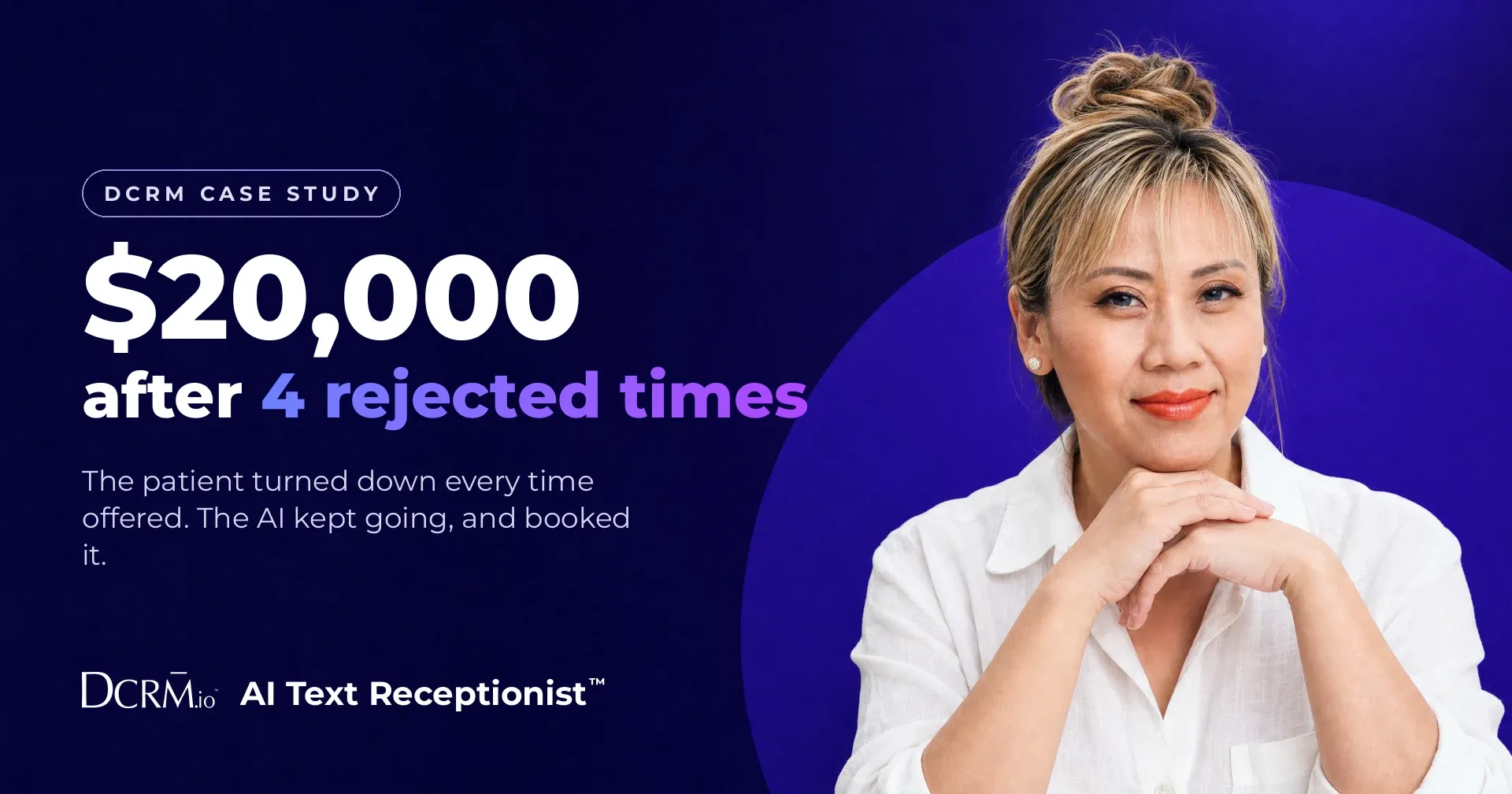
AI Text Receptionist™
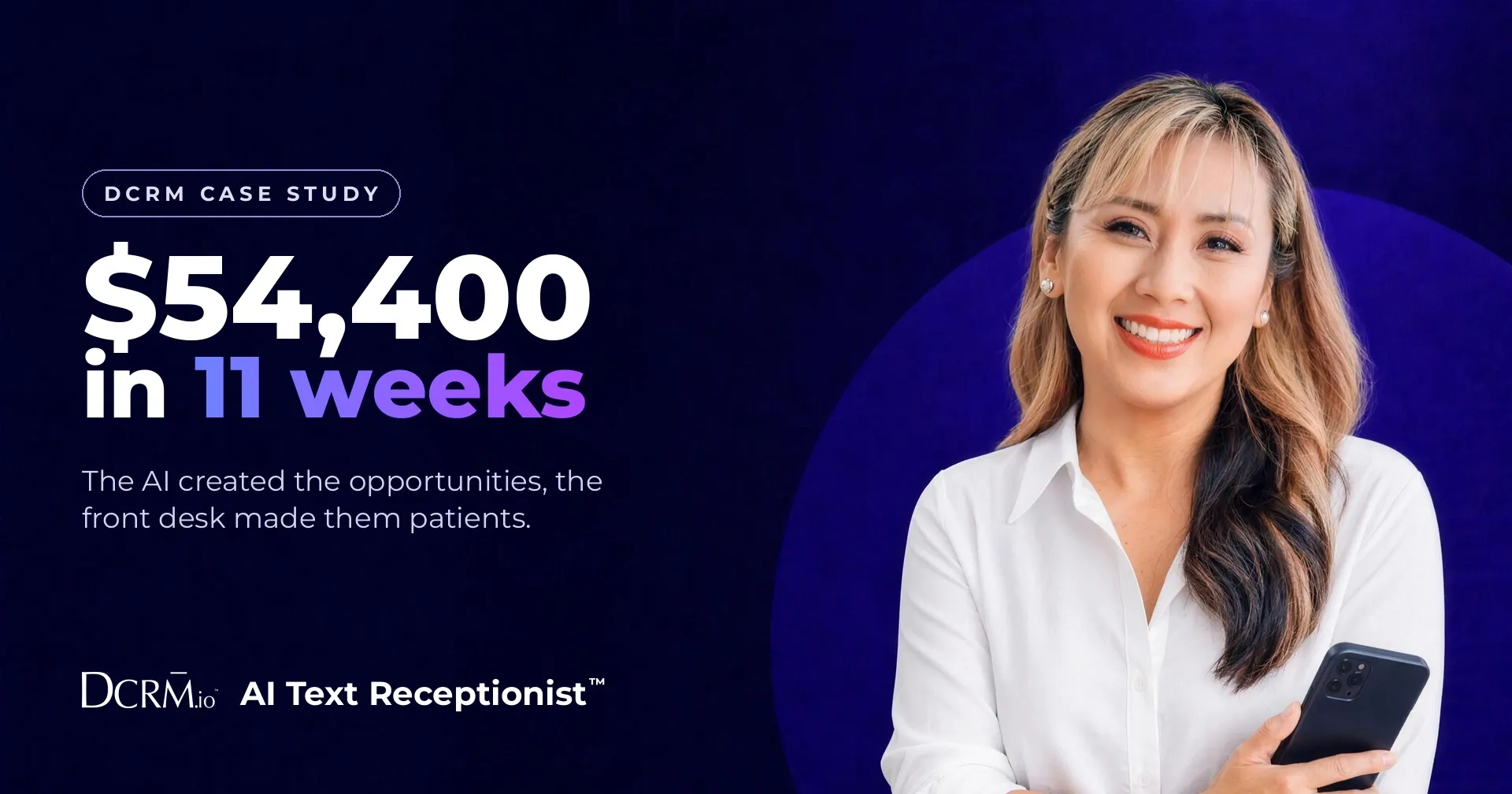
Where this sits in DCRM
It picks up replies from the Price List Funnel™, handles enquiries that arrive through the SmileEngine™ Form, and creates opportunities inside the SmileEngine™ Pipeline.
Everything before it brings the enquiry in. Everything after it makes sure the enquiry gets worked.
Be honest with yourself
If every enquiry arrives during business hours and somebody picks up inside five minutes each time, you do not need this.
If your front desk will not work a callback list, this is not for you either. The AI hands over warm enquiries. Somebody still has to ring them.
Where it makes sense is a practice running paid lead forms or an opt-in funnel, where leads land in the evening and over weekends.
Getting started
Nothing to install on your website. It runs on your existing practice number.
FAQs
It answers patient texts the moment they arrive, works out which treatment they want and whether they would like a call, then hands the front desk an opportunity with those details on it.
Within seconds, at any hour, including weekends and the middle of the night.
That is your choice. Block off slots in the DCRM calendar and it can offer those times and book. Otherwise it qualifies the enquiry and hands it over, and your team makes the call.
No. For all pricing questions, it lets your team handle them.
SMS, Instagram, Facebook Messenger and WhatsApp.
It does not guess. It sends the relevant link or says your team will be in touch, then leaves the question for a human. It is built to qualify, not to be a customer service agent.
They come out of the sequence and receive nothing further.
Yes. We have mechanisms in place to stop the AI immediately, so the patient never sees two voices on one thread.
Contact the patients the AI created an opportunity for in the SmileEngine™ Pipeline, and book them in.
Then this is not the right fit, and that is ok.
Your team is there for the relationship. The automation is there for the speed. DCRM helps you get the best of both worlds.